Planning Your First Surf Trip
Planning Your First Surf Trip
There are few experiences more exciting than planning your first dedicated surf trip. Whether you're heading to Costa Rica, Bali, or the south of France, a little preparation goes a long way toward making sure you spend more time in the water than figuring things out.
Step 1: Choose the Right Destination for Your Level
Not all surf destinations are created equal. As a beginner, your priority is warm water, forgiving waves, and access to surf schools with good instructors.
Top beginner-friendly destinations:
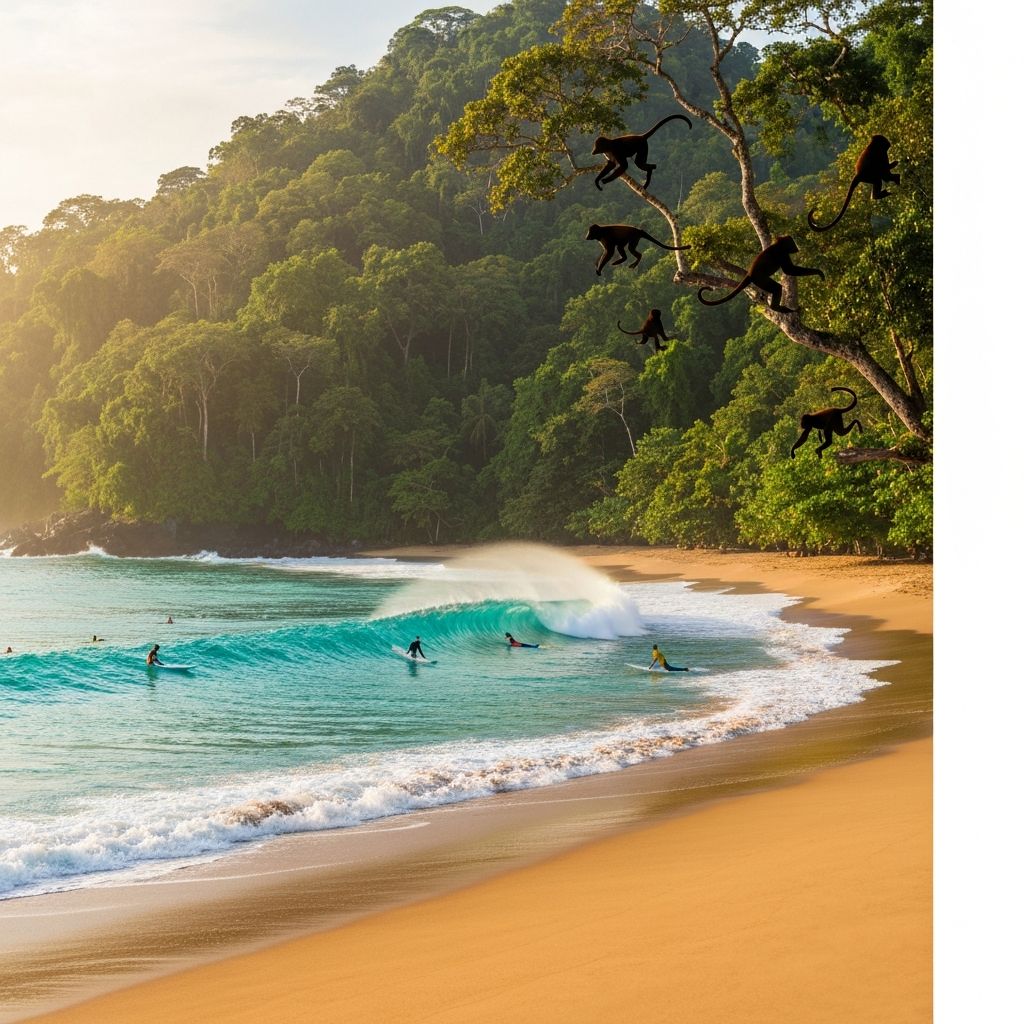
- Santa Teresa, Costa Rica — warm water, consistent beach breaks, yoga culture, no wetsuit needed
- Bali, Indonesia (Canggu/Kuta) — mellow beach breaks, affordable lessons, vibrant surf community
- Taghazout, Morocco — mellow point breaks, affordable, growing beginner scene
- Newquay, Cornwall (UK) — accessible for Europeans, consistent beach breaks, great school infrastructure
Avoid destinations famous for heavy reef breaks or big waves (like Pipeline or Nazaré) until you're at an intermediate level.
Step 2: Pick the Right Time of Year
Every destination has a surf season. Travelling during peak season means better waves but bigger crowds. Shoulder season often delivers the best balance — good conditions with fewer people.
Check the Best Season on each destination page for guidance. Generally, plan your trip around:
- Swell consistency: Does the destination receive reliable swell during your dates?
- Wind direction: Offshore wind (blowing from land to sea) grooms the waves. Onshore wind (from sea to land) makes them messy.
- Weather: Rain doesn't stop surfing, but lightning does.
Step 3: Gear Up (But Don't Overpack)
You don't need to travel with your own board for a first trip — renting locally is cheaper and easier. Focus on:
Essential items:
- Rashguard (protects against sun and board rash)
- Board shorts or bikini that won't fall off in waves
- Reef-safe sunscreen (SPF 50+, re-apply constantly)
- Fin key (if bringing your own fins)
- Surf wax (though most rental boards already have it)
Wetsuit: Check the water temperature. Bali in April is 28°C — no wetsuit needed. France in October is 18°C — you want a 3/2mm.
Board: If renting, ask for a soft-top (foamie) longboard. More volume = easier paddling = more waves caught.
Step 4: Book Lessons Early
Good surf schools fill up. Book at least 2–3 lessons before you arrive, especially during peak season. Look for:
- Schools with certified instructors (ISA or equivalent)
- Small group sizes (maximum 6 students per instructor)
- Board and leash included
- Safety briefing before entering the water
Two hours of instruction beats four hours of guessing. A good instructor will coach your pop-up, help you read waves, and keep you safe.
Step 5: Know the Unwritten Rules
The surf lineup has etiquette. Breaking it — even accidentally — creates conflict. The basics:
- Right of way: The surfer closest to the breaking part of the wave has priority. Don't drop in on them.
- Don't snake: Repeatedly paddling around someone to steal their position is bad form.
- Paddle wide: When paddling out, go around the break zone, not through it.
- Call your wave: A quick "going left!" or "going right!" helps everyone around you.
- Respect locals: They surf there every day. Watch, learn, and say hello.
Step 6: Be Honest About Progress
Surfing is hard. Most people don't stand up on their first day, and that's completely normal. A realistic timeline:
- Day 1–2: Paddling technique, pop-up on the beach, catching whitewater
- Day 3–5: First green waves, finding balance, basic turns
- Week 2+: Reading waves, choosing lines, building consistency
Go at your own pace. The ocean will be there tomorrow.
Final Checklist Before You Go
- [ ] Travel insurance that covers water sports
- [ ] Lessons booked
- [ ] Accommodation near the break (saves time and energy)
- [ ] Rashguard and sunscreen packed
- [ ] Passport valid for 6+ months beyond your travel dates
- [ ] Let someone know your surf plans each day
Your first surf trip will be one you remember forever — paddle hard, stay humble, and enjoy every second of it.